Rebuilt From the Wreckage: Strategic Lessons US Crypto Investors Are Applying After the 2022–2023 Downturn
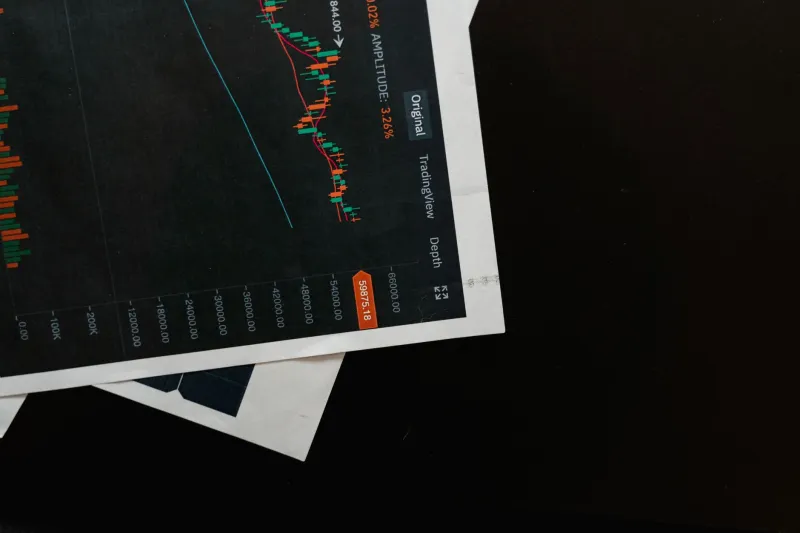
The numbers from the 2022 crypto collapse are well documented. Bitcoin shed roughly 65 percent of its value over the course of the year. Ethereum followed a similar trajectory. Terra's algorithmic stablecoin imploded in a matter of days, erasing tens of billions in market capitalization. FTX — once considered a pillar of institutional legitimacy — collapsed into bankruptcy fraud allegations that shook retail confidence across the entire sector.
For many American investors, 2022 was not simply a losing year. It was a reckoning.
The question worth examining now is not what went wrong — that record is fairly well established — but what disciplined traders actually did afterward. How are the investors who survived, and in some cases thrived, restructuring their approach to digital asset markets? And what separates the strategies that produced genuine resilience from those that simply got lucky during the recovery?
The First Lesson: Leverage Was the Real Villain
Post-mortems of the 2022 downturn consistently identify excessive leverage as the primary mechanism of catastrophic loss. This is worth stating plainly, because leverage in crypto markets is easy to access, aggressively marketed, and genuinely dangerous in ways that many retail investors did not fully appreciate until the liquidation notices arrived.
The investors who recovered most effectively from the 2022 cycle were, with notable consistency, those who had maintained unleveraged spot positions. Their portfolios declined in value — sometimes substantially — but they were never forcibly liquidated. They retained the ability to hold through the drawdown, average into lower prices, and participate in the subsequent recovery.
The lesson is not that leverage is always inappropriate. Sophisticated traders with genuine risk management infrastructure, defined stop-loss disciplines, and position sizes calibrated to their total capital base can deploy leverage thoughtfully. But for the majority of retail investors, the 2022 experience demonstrated that the asymmetric downside of leveraged crypto positions — particularly in a market characterized by extreme volatility and thin liquidity during stress events — outweighs the upside in most realistic scenarios.
The practical framework that has emerged from this lesson is straightforward: treat leverage as a tool reserved for specific, time-limited tactical positions with hard exit parameters, not as a structural feature of a long-term portfolio.
Concentration Risk and the Illusion of Conviction
Another pattern that distinguished the investors who recovered from those who did not was their relationship with portfolio concentration. The bull market of 2020 and 2021 rewarded concentration handsomely. Investors who allocated heavily to a single high-conviction asset — or worse, a single high-conviction narrative like algorithmic stablecoins or layer-one alternatives — often saw extraordinary short-term returns.
Those returns created a psychological trap. Outsized gains in a concentrated position feel like validation of superior judgment. They are often nothing of the sort. In a broadly rising market, concentration in almost any asset within that market will produce impressive numbers. The skill becomes apparent only when conditions reverse.
The restructured portfolios that have demonstrated resilience since 2023 tend to share several structural characteristics: meaningful allocation to Bitcoin and Ethereum as base-layer assets, selective exposure to higher-risk altcoins capped at a defined percentage of total portfolio value, and a genuine cash or stablecoin reserve — not as a sign of timidity, but as dry powder for opportunistic deployment during periods of maximum market distress.
This architecture does not maximize returns in a bull market. It is not designed to. It is designed to ensure that a bear market does not become a permanent impairment of capital.
Dollar-Cost Averaging as a Psychological Anchor
Among the behavioral strategies that produced the most consistent recovery outcomes, systematic dollar-cost averaging stands out — not primarily for its mathematical properties, but for its psychological ones.
The challenge of investing through a prolonged downturn is not primarily analytical. Most experienced investors understand intellectually that buying quality assets at depressed prices is sensible. The difficulty is emotional: every purchase made into a declining market feels like catching a falling knife, and the psychological resistance intensifies as the drawdown deepens.
Investors who committed to a fixed, recurring purchase schedule — weekly, bi-weekly, or monthly — removed the decision from the emotional domain entirely. They did not have to summon conviction at the moment of maximum fear. The discipline was embedded in the process rather than dependent on moment-to-moment judgment.
The investors who applied this framework consistently through 2022 and into 2023 accumulated meaningful positions at prices that now represent substantial unrealized gains. More importantly, they developed a psychological relationship with market volatility that is genuinely different from those who attempted to time re-entry. Volatility became a mechanical input rather than an emotional event.
Redefining the Role of Stablecoins
The Terra/LUNA collapse forced a painful but necessary reassessment of how American investors use stablecoins within their portfolios. The promise of high-yield algorithmic stablecoin returns attracted billions in capital that subsequently evaporated with extraordinary speed.
The recovery-oriented portfolios that have emerged from this experience treat stablecoins with considerably more rigor. Investors are now more likely to distinguish between collateralized stablecoins backed by verifiable reserves — such as USDC — and algorithmic or partially collateralized alternatives that carry structural risks that are not always apparent during normal market conditions.
Stablecoins in resilient portfolios serve a specific function: they provide a non-correlated reserve that can be deployed during market dislocations without requiring the liquidation of appreciating positions. This is fundamentally different from treating stablecoins as yield-generating instruments, which introduces credit and protocol risk into what should be the most conservative component of a crypto allocation.
The Psychological Infrastructure of Recovery
Perhaps the most underappreciated dimension of portfolio resilience is psychological. The investors who navigated the 2022–2023 cycle most effectively were not necessarily those with the most sophisticated analytical frameworks. They were those who had developed a clear, pre-committed investment policy — and who adhered to it under conditions specifically designed by market dynamics to make adherence feel irrational.
This means defining, in writing and in advance, the conditions under which you will add to positions, reduce positions, or exit entirely. It means establishing position size limits that you will not breach regardless of conviction level. It means deciding, before the market tests your resolve, what percentage drawdown you can genuinely sustain without making emotionally driven decisions.
At AliasCrypt, we observe that the most resilient investors approach portfolio management as a system rather than a series of independent decisions. Systems are more resistant to emotional override than individual choices made under pressure.
Building Forward
The 2022–2023 downturn is now historical. The lessons it produced are not. The structural vulnerabilities it exposed — excessive leverage, dangerous concentration, misunderstood stablecoin risk, and inadequate psychological preparation — remain present in the market today, waiting to be triggered by whatever catalyst the next cycle produces.
The investors who will navigate that cycle most effectively are not those who predict it most accurately. They are those who have built portfolios and disciplines that do not require accurate prediction to survive.