The Silent Drain: How Execution Slippage Is Quietly Eroding US Retail Traders' Annual Returns
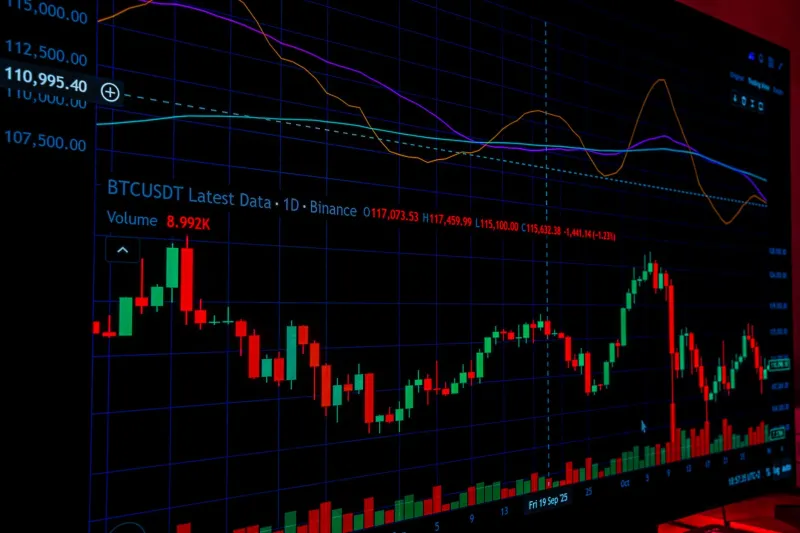
Every experienced trader knows the frustration: you place a market order for Bitcoin at $62,400, and the execution confirmation arrives showing a fill at $62,487. The difference feels trivial in isolation. Multiply it across dozens of weekly trades, scale it against position sizes that grow as portfolios mature, and that seemingly minor variance transforms into a material annual expense—one that never appears on a tax form, never shows up in an exchange fee schedule, and rarely receives the scrutiny it deserves.
This is execution slippage. And for a significant portion of US retail traders, it represents a larger drag on performance than trading fees, withdrawal costs, or even moderate tax inefficiency.
Understanding the Mechanics Behind Every Fill
Slippage occurs when the price at which an order is executed differs from the price at which it was intended to execute. In cryptocurrency markets, this divergence arises from two primary sources: latency and order-book depth.
Latency refers to the elapsed time between when a trader initiates an order and when that order reaches the exchange's matching engine. Even delays measured in milliseconds matter in liquid markets where prices update hundreds of times per second. A retail trader accessing a centralized exchange through a standard web interface operates with round-trip latencies typically ranging from 80 to 300 milliseconds. During that window, the bid-ask spread can shift, large orders can partially consume available liquidity, and the price a trader saw on screen becomes a historical artifact.
Order-book depth compounds the problem. When a market order is placed for a position larger than the volume available at the best ask price, the order "walks up" the book, filling at progressively worse prices until the full quantity is satisfied. For a trader purchasing $50,000 worth of a mid-cap altcoin on a thinly traded venue, this walk can easily produce a realized entry price 0.5% to 1.2% above the quoted price—before a single fee is assessed.
Calculating the Real Annual Cost
Consider a trader executing an average of four round-trip trades per week across a $150,000 portfolio. Each round-trip consists of an entry and an exit, meaning eight individual order executions weekly. If average slippage per execution is conservatively estimated at 0.15%—a figure well within documented norms for retail market orders on major US-accessible exchanges—the arithmetic is sobering.
- Per execution cost: $150,000 × 0.15% = $225
- Weekly cost (8 executions): $1,800
- Annual cost: approximately $93,600
Even halving the position size or trade frequency produces annual slippage costs exceeding $20,000 for an active retail participant. These figures are not hypothetical extremes; they reflect realistic conditions documented in market microstructure research and confirmed by traders who have begun instrumenting their own execution quality.
The numbers shift considerably based on asset selection and venue choice. Trading Bitcoin on a high-liquidity exchange with deep order books produces far less slippage per dollar than trading a lower-cap token on a venue with thinner participation. The spread between best-case and worst-case slippage environments can exceed 10x for comparable trade sizes.
Why Venue Infrastructure Matters More Than Most Traders Realize
Not all exchanges are architecturally equivalent. The matching engine technology, co-location capabilities, and API infrastructure of a given platform directly influence the execution quality available to its users.
Institutional participants on major exchanges often access co-located servers—physical hardware positioned within the same data center as the exchange's matching engine—reducing round-trip latency to microseconds. Retail traders connecting through standard web interfaces or even third-party trading applications operate at a structural disadvantage that no amount of market timing can fully offset.
This does not mean retail traders are without recourse. Selecting exchanges that prioritize transparent execution quality reporting, maintain deep liquidity pools, and offer direct API access provides a meaningful improvement over consumer-grade interfaces. Several US-compliant platforms publish execution quality metrics, including average fill rates and price improvement statistics, that allow traders to make informed venue comparisons before committing capital.
Order Type Selection as a Slippage Mitigation Tool
The choice between market orders, limit orders, and more sophisticated order types is among the most immediately actionable levers available to retail traders.
Market orders guarantee execution but surrender price control entirely. In volatile conditions or thin markets, the cost of that guarantee is substantial. Limit orders, by contrast, specify the maximum acceptable entry price or minimum acceptable exit price, effectively capping slippage at zero on the unfavorable side—though at the cost of potential non-execution if the market moves away before the order fills.
For traders operating in markets with sufficient liquidity, post-only limit orders offer an additional advantage: they ensure the order rests in the book as a maker rather than crossing the spread as a taker, often qualifying for reduced fee tiers while simultaneously avoiding the price impact associated with aggressive order routing.
Iceberg orders and time-weighted average price (TWAP) execution strategies—available through certain platforms and algorithmic trading tools—allow larger positions to be built or unwound gradually, reducing the market impact of any single order event. Traders who have adopted TWAP-style entry strategies for positions exceeding $25,000 frequently report execution prices meaningfully closer to their target than single-order approaches achieve.
Timing as a Structural Advantage
Market conditions at the moment of execution influence slippage as significantly as order type or venue selection. Liquidity in cryptocurrency markets follows identifiable patterns. Bid-ask spreads typically widen during off-peak hours—particularly during early morning US sessions and weekend periods when institutional participation declines. Executing large orders during these windows amplifies slippage risk.
Conversely, peak liquidity hours—generally overlapping with the opening hours of US equity markets and periods of high macroeconomic data release—tend to produce tighter spreads and greater order-book depth. Traders who schedule discretionary entries and exits around these windows, rather than reacting impulsively to price movements, often capture materially better fills over time.
Volatility events present a distinct consideration. During rapid price dislocations, spreads can widen dramatically within seconds. Placing market orders immediately following a significant news event—when the instinct to act is strongest—frequently produces the worst execution of any period. Implementing a brief delay discipline, waiting for initial volatility to subside before executing, can reduce slippage costs substantially during these episodes.
Building an Execution Quality Practice
The traders who have most successfully reduced slippage losses share a common habit: they measure. Rather than accepting execution quality as an uncontrollable variable, they log intended entry prices alongside actual fill prices for every trade, calculate the per-trade slippage cost, and review that data periodically to identify patterns.
This practice—straightforward to implement with a basic spreadsheet—transforms slippage from an invisible drag into a quantified expense subject to optimization. Traders who have maintained such records for six months or more consistently identify the venue, order type, and timing combinations that produce their worst outcomes, allowing targeted adjustments that compound favorably over time.
At AliasCrypt, the premise underlying secure digital asset trading extends beyond protecting capital from external threats. The structural costs embedded within every trade are equally a security concern—one that rewards the same systematic, disciplined approach that serious investors apply to custody, compliance, and risk management.
Slippage is not inevitable. It is, for the prepared trader, a manageable variable. And managing it well is among the highest-return optimizations available to any active participant in US cryptocurrency markets today.