Three Budgets, Three Threat Models: What Your Hardware Wallet Dollar Is Really Defending Against
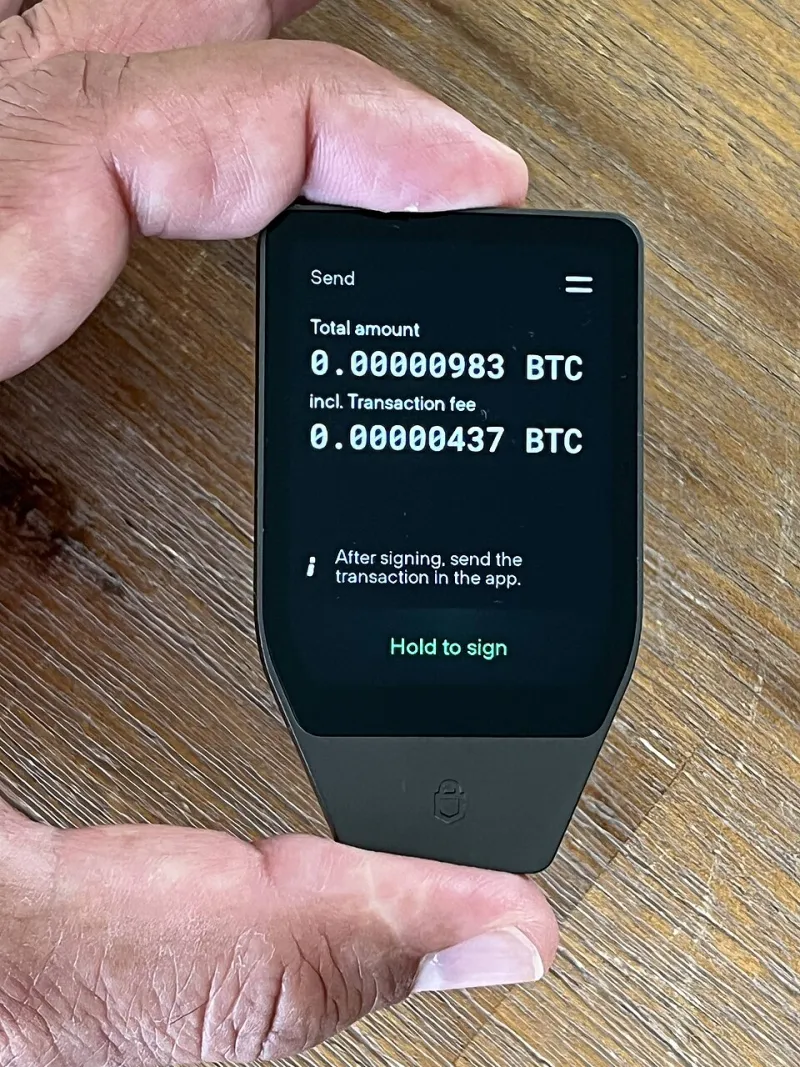
Photo: FlippyFlink, CC0, via Wikimedia Commons
Hardware wallet marketing loves to imply a simple equation: more money, more security. In practice, the relationship is far less linear. A $50 device and a $5,000 signing setup are not points on one continuum — they answer different questions. Before spending anything, the disciplined investor should ask a single question: what attack am I actually trying to survive?
The $50 Tier: Beating Remote Theft
Entry-level devices from established manufacturers — the kind of signed, open-source or at least firmware-verified hardware sold for one or two Benjamins — solve one problem extremely well: keeping private keys off an internet-connected machine. For the majority of American retail holders whose realistic threat is phishing, malware, or a compromised laptop, this is the entire battle.
What matters at this tier is not the display quality or the Bluetooth. It is the boring things:
- Firmware transparency. Can you verify what code is running? Open-source firmware with reproducible builds beats a proprietary black box at any price.
- A genuine supply chain. Buy from the manufacturer, not a third-party marketplace. Tampered devices are rare but documented.
- A real secure element. Keys should be generated and stored in hardware that resists physical extraction.
The honest cost-benefit verdict: below roughly $10,000 in holdings, spending beyond this tier often buys comfort rather than meaningful protection.
The $500 Tier: Buying Redundancy and Accountability
The mid-range is where security stops being a product and starts being a system. Two or three devices from different manufacturers, configured as a multisig quorum — a 2-of-3 arrangement, for example — distributes trust so that no single vendor's failure, no single device's compromise, and no single geographic location's loss can take your funds hostage.
Multisig is the most underused feature in retail self-custody. It converts a single point of failure into a policy. The trade-offs are real: recovery is more complex, coordination across signing devices introduces friction, and a poorly documented setup can lock out heirs entirely. But for five- and six-figure portfolios, that friction is cheap insurance against both theft and personal error.
At this tier, also budget for process: a written recovery document, a tested restore on a spare device, and geographic separation of backups. The hardware is half the purchase; the procedure is the other half.
The $5,000 Tier: Institutional-Grade Signing
Premium setups — air-gapped signing devices, dedicated machines that never touch a network, coordinated multisig with independent backup vendors, sometimes with professional custody integrations — are justified when the threat model includes targeted attackers. Business treasuries, high-net-worth individuals, and anyone whose holdings would justify a physical or social-engineering attack fall into this category.
What does the money actually buy? Tamper-evident hardware, deeper firmware auditability, dedicated air-gapped environments, and — critically — the ability to segment signing authority so no one person, including you, can move funds alone. That last feature is worth more than any spec sheet: it protects against coercion, mistake, and insider compromise simultaneously.
When Paper Beats Plastic
For a few hundred dollars in a long-dormant holding, a properly generated paper backup of a key — created offline, stored securely, never photographed — can be the rational choice. Paper cannot ship a compromised firmware update. The caveats are serious: no spending capability without importing the key, vulnerability to physical degradation, and zero protection against a badly generated key. But as a cold vault for dust-level balances, it remains the cheapest secure option in existence.
The through-line at every budget is the same: match the spend to the threat, verify the firmware, and never let a device substitute for a documented, tested recovery plan. Security at any price is a habit before it is a product.